
How Small Signs Get Missed
[TLDR: Drug abuse rarely starts with one big moment. More often, it grows through small choices, quiet shifts and warning signs that are easy to miss until things have already gone too far. In this interview-led feature, Peter Teo reflects on how earlier intervention, steady check-ins and speaking up sooner could have made a difference before drug abuse took hold.]
Drug abuse usually does not have a dramatic start. Some people experiment, thinking it’ll be a one-off try. Some found themselves following what others did for social inclusion. That is part of what makes it so easy to get drawn in, especially when being open to the idea of taking drugs gets normalised. It can quietly move a life in the wrong direction.
This is why early intervention matters. It is not always about a big confrontation or a perfect speech. Sometimes it is about noticing changes in someone’s behaviour, the people they spend time with, how they talk about drugs, or whether they have become more withdrawn and difficult to reach.
For former drug abuser Peter Teo, this emulated his experience with drug abuse starting in his teens and began the path from small choices to bigger consequences.
How It Started
Peter does not describe his first encounter with drugs as a major turning point. Around the age of 14, after starting to mix with a gang and going through a breakup, he turned to a neighbour who was a drug trafficker. Trying drugs felt less like danger and more like curiosity. “I thought, just try,” Peter recalled. “It was curiosity at that moment.”
The first experience was far from pleasant. Peter described feeling numb, losing control of his body and vomiting afterwards. The experience put him off temporarily, but the people around him eventually drew him back.
As drug abuse became normalised within his social circle, it also became part of Peter’s daily routine and eventually something he felt he needed, just to function normally.
When Warnings Did Not Get Through
Peter’s family and childhood friends saw what was happening and did not stay silent. His childhood friends encouraged him to stop. His parents pleaded with him and even cried in front of him. But by then, Peter was already too deep in.
He treated advice like white noise, and resisted being told what to do. “Whatever advice they gave to me at that time was very difficult to get into my head,” Peter recalled. His immediate social circle and the physical dependency on drugs had created a barrier that made it hard to break through. At that moment, the interventions seemed to have failed.
Even incarceration did not immediately end the cycle. After his release, Peter returned to the same social circle and found himself succumbing to the same influences.
Yet, looking back, those seemingly ineffective interventions actually played a critical role. While they did not stop his drug abuse immediately, they planted a seed of doubt. Seeing his parents’ pain created a quiet friction – a dissonance – between the life he was living and the realisation of what he was doing to the people who loved him.
This is the complex reality of early intervention: it may not trigger an instant turnaround, but it is never wasted.
For Peter, the turning point ultimately had to come from within. “The desire to stop drug abuse has to come from that particular person himself or herself,” he explained. But when that internal shift finally happened, and Peter decided he wanted to change, he knew he wasn’t starting from scratch. The persistent, albeit painful, interventions from his family had left the door open. They had established a foundation of care, meaning that when he was finally ready to take the first step, he knew exactly who he could turn to for support.
Looking back, Peter’s experience also raises the question of whether someone could have noticed the changes he was going through earlier. Speaking up may not lead to an immediate change, but noticing shifts in someone’s behaviour, social circle or attitude towards drugs can create an opportunity to get through to them before the pattern becomes more deeply entrenched.
Peter eventually made the decision to change his life, cutting contact with his old friends and pursuing a career in the culinary world. Recognising the opportunities and breaks that were given in his life, Peter joined Breakthrough Missions to launch Breakthrough Café where he mentored and trained former inmates in French cuisine, workplace disciplines and leadership, helping them to build a better future and showing them they were not alone.
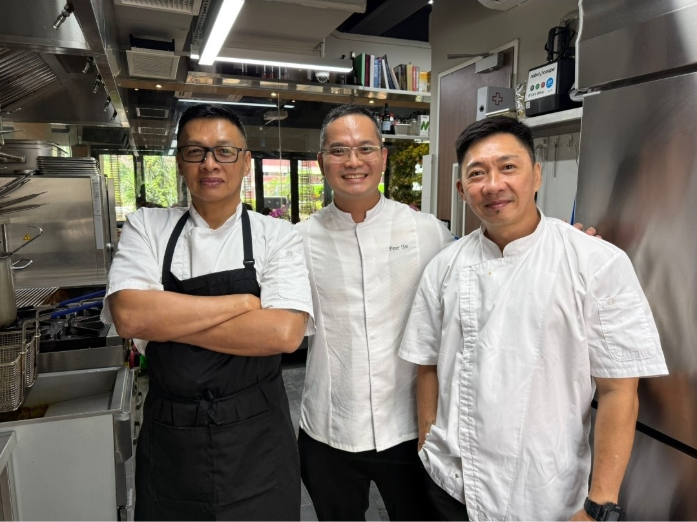
“My role was to inspire them and be an example,” he said.
“That meant checking in with someone when they seem troubled, staying available when someone needed to talk.”
What He Would Do Differently
Often, people hesitate to speak up because they fear pushback or worry they will drive their friend away. However, as Peter’s journey shows, initial pushback is expected. True support means being willing to take that risk – choosing to step in for a friend’s long-term safety and well-being, even if it means navigating some temporary tension, rather than staying “safely” silent.
For Peter, this active presence means helping in practical ways instead of just talking at them. If someone needed food, he will bring them out to eat. If someone needed support, he will follow up.
“I will make sure that I have to be there for this person first,” he said.
Being present is about finding the delicate balance of staying close to someone while still signalling that change is the ultimate goal.
For Peter, the point is not to win an argument in one conversation but to remain present long enough for the person to know that support is available when they are ready to accept it. That support does not have to come from one person alone. When family, friends and other trusted people check in consistently and show they care, their collective presence could help that person feel that there are still people they can count on to be the voice of reason and safe space.
At the same time, he recognises that friends and family cannot make the decision for them. But by stepping in, their steady support injects the idea of changing direction, making that change feel possible when the individual is ready to do so.
What He Tells His Children Now
Peter’s experiences now shape how he talks to his own children about drugs.
Rather than simply telling them not to take drugs, he shares what happened to him – the gangs, the drug abuse, his time in prison and the cycle that continued until he decided to change.

“I do explain to my kids,” he said. He wants them to understand that drug abuse does not lead to just one bad decision or consequence. It can affect a person’s relationships, freedom and future.
“I say it’s a good thing that I decided that I wanted to change my life,” he said.
Peter’s story is a reminder that drug abuse can grow through small choices and quiet changes that are easy to overlook.
Support often begins with small moments, checking in, asking a question or simply letting someone know you’re there.
Explore our conversation guides to help you navigate real conversations about drugs and permissive attitudes. Whether you’re someone who prefers to ask questions, share your perspective, use humour or simply listen, the guides are designed to help you speak up in a way that feels natural to you.
Because conversations don’t have to be perfect to make a difference.
You may also like

Most of Us Say No – So HOW Do We Actually Say So?
[TLDR: Most of us already know where we stand on drug abuse but that does not always make it easy to say so when the topic surfaces in casual conversations, especially with someone we care about. This article looks at how to hold your ground without shutting the person out, and why speaking up can […]

Most of Us Say No – So WHY Aren’t We Saying So?
[TLDR: More than 90% of Singaporeans want the country to remain drug-free. But it can feel like the opposite is true in the online space. This article looks at how permissive drug views gain hegemony through the cultural lens for wider social issues, of legality, progressiveness, normalisation, curiosity and groupthink – and why knowing our […]